

The Andalucian city of Córdoba boasts four UNESCO World Heritage Sites – the historic centre, the Mezquita (Mosque-Cathedral), the Fiesta de los Patios, and the city of Medina Azahara.
A brief history of Córdoba
Córdoba has a colourful history. Founded by the Romans in the second century BC it was taken over by the Visigoths in the sixth century before being conquered by Muslims in the eighth century when it became the capital of Al-Andalus. During the tenth century it was Europe’s largest city, and a renowned centre for education and learning.
Following the Christian conquest in 1236 Córdoba’s days as a political and cultural capital came to an end. During the years that followed there were peaks and troughs in Córdoba’s fortunes. It was one of the first cities occupied by Francoist forces in the Spanish Civil War and is now the third largest city in Andalucia (after Seville and Malaga).

This post may contain affiliate links which means if you click a link and purchase something that I have recommended I may receive a commission. While clicking these links won’t cost you any money, it will help to keep this site going. Thank you for your support.
Whatever your interests you’ll find something for you here so read on and discover some of my favourite things to do in Córdoba. There’s a lot covered in this guide so, if you only have a short time in the city, just pick what appeals to you most. However, I do have one- and two-day itinerary posts coming soon.
All prices are correct as of February 2026.
Marvel at the Mezquita
The Mezquita is one of the most recognisable buildings in Andalucia if not the whole of Spain and, regardless of how many photos you’ve seen, I don’t think anything can really prepare you for that first glimpse of its interior with hundreds of striped arches stretching into the distance.
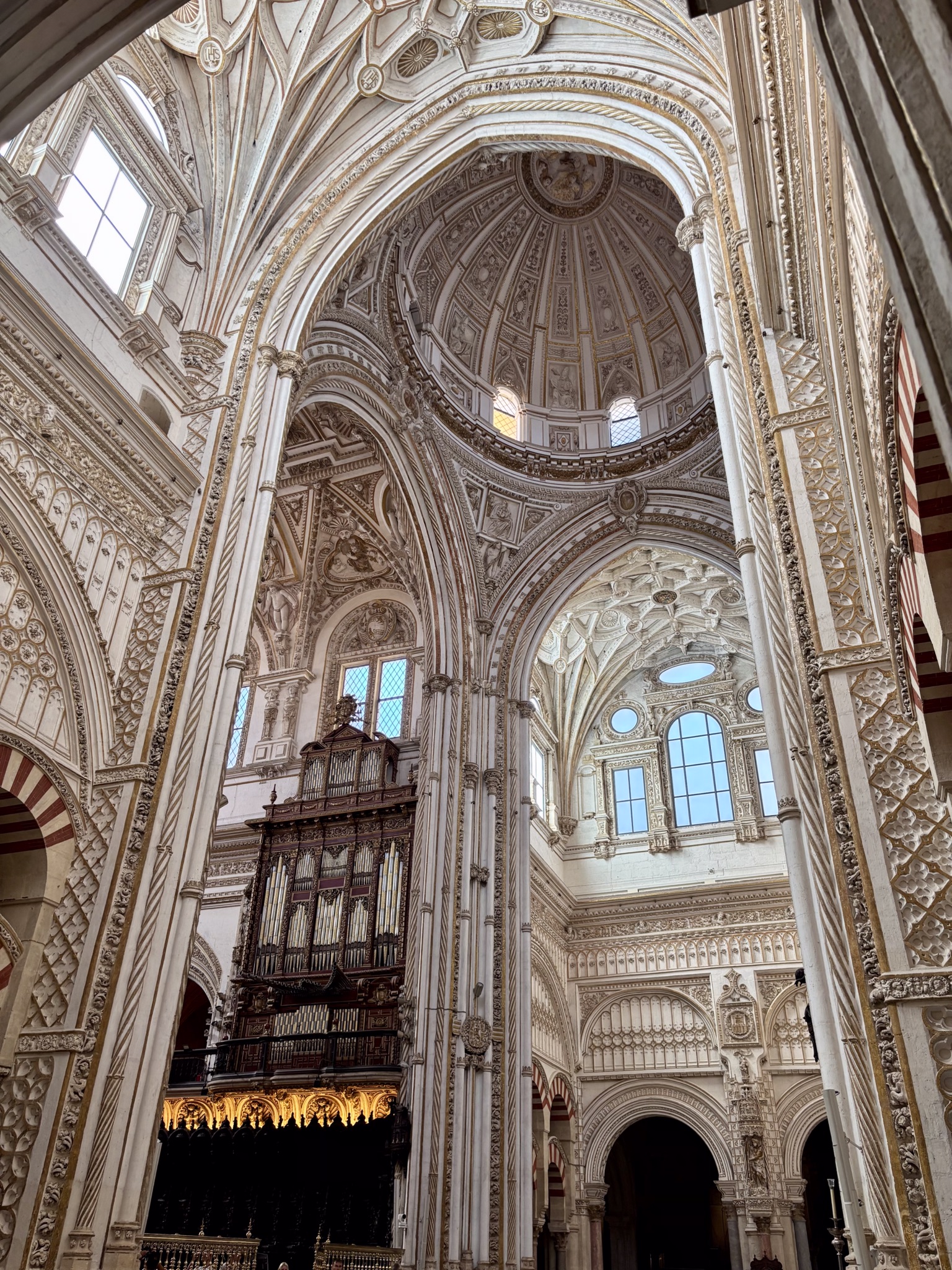
The original mosque was built between 786 and 788 by Abd al-Rahman I and expanded several times over the years, creating the forest of red and white striped arches and columns. In 1236 the mosque was converted into a cathedral, with a Renaissance nave built in the middle of the Islamic structure.
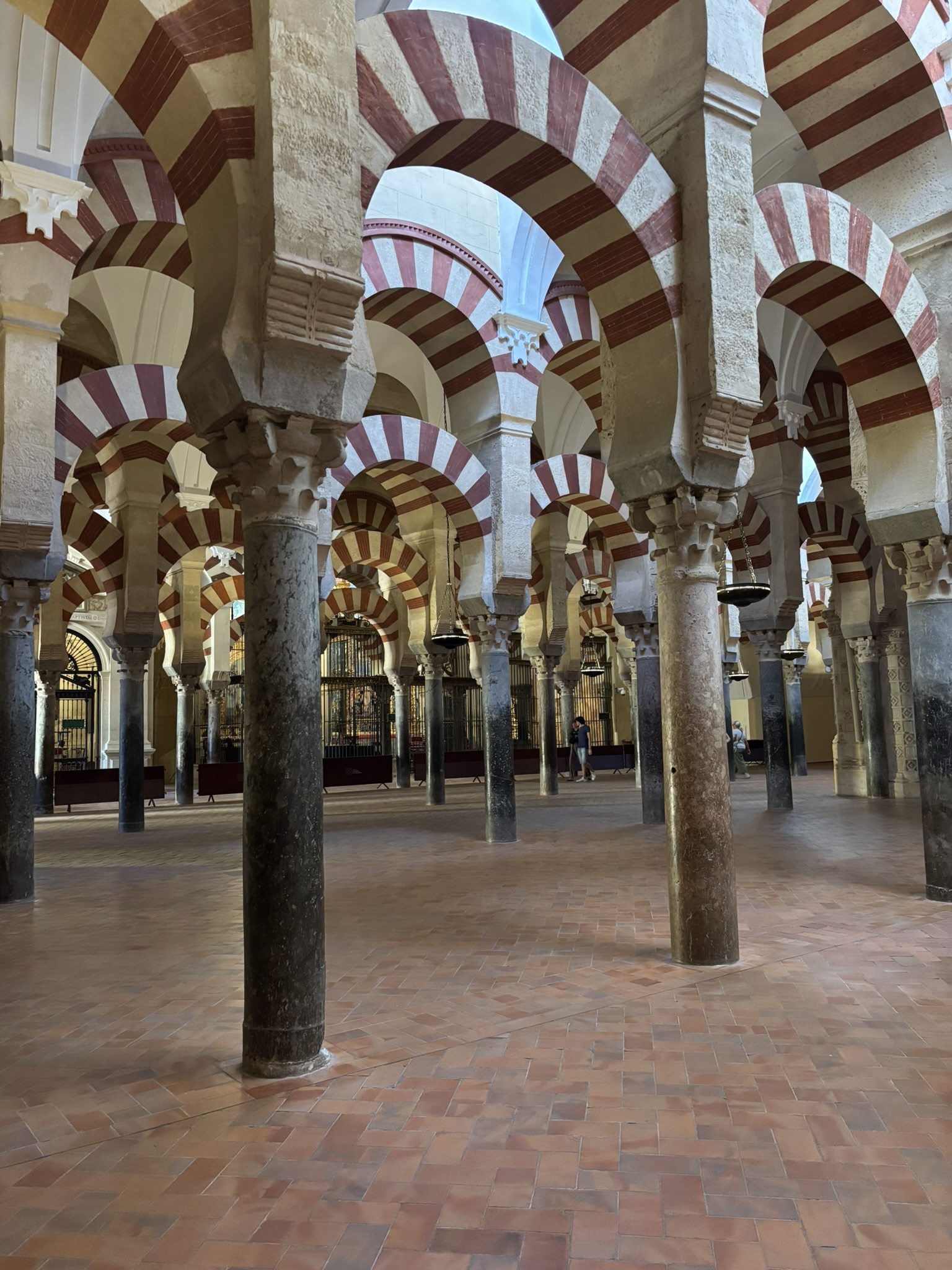
The result is a jaw dropping mix of Islamic and Christian architecture and, unsurprisingly, it’s been a National Monument since 1882, was declared a UNESCO World Heritage Site in 1984, and classified as a Site of Outstanding Universal Value in 2014.
As you would expect, the Mezquita is extremely popular so, if you want to see it without the crowds, you need to time your visit right.
You can visit the Mezquita for free every morning between 8.30am and 9.20am although, as the cathedral is being prepared for mass at this time, you won’t get access to that part of the building.
If you’re staying for longer than a day then I’d suggest visiting around 5pm – at that point the tour groups and day trippers have all headed home so you can really get to appreciate the building without the crowds.
You might also want to do a night tour. Places for these are limited to 80 people and photography isn’t allowed which means it’s all the more magical.
It can be confusing trying to decide when to go and which ticket to buy so I’ve written this guide to visiting the Mezquita to help you figure out which is the right one for you.
Check the official website for current opening times and prices.
📍 Mezquita de Córdoba, Calle Cardenal Herrero, Córdoba
Climb the Bell Tower
While you’re visiting the Mezquita you should also consider climbing the bell tower, which was once the mosque’s minaret.
From the top you get 360-degree views over Córdoba and the Mezquita itself and you can really appreciate the sheer size of the building.

Each visit to the bell tower lasts 30 minutes and there’s a maximum of 20 people in each time slot so it doesn’t feel crowded when you’re at the top. The first entry is at 9.30am and they run every half an hour until the last one at 6pm with a ticket costing just €3 for adults.
There’s more information in my guide to visiting the Mezquita.
📍 Mezquita de Córdoba, Calle Cardenal Herrero, Córdoba
Walk through Puerta del Puente
Effectively the gateway to the Roman bridge, Puerta del Puente is the archway that stands on the bank of the Rio Guadalquivir in front of the Mezquita.

Built in the 16th century to commemorate a visit to the city by King Philip II, you can stroll through the archway before crossing the Roman bridge but you can also climb to the top on selected dates for a birds’ eye view of the bridge and the river. On the way up to the top you’ll pass an exhibition of drawings of the archway throughout the years.

Entry is free and, at the time of writing, is on weekends only.
📍 Puerta del Puente, Plaza del Triunfo, Córdoba
Stroll across the Puente Romano
The wide Roman bridge was built in the 1st century BC but has been restored and renovated many times over the years. Today it’s pedestrian only which makes it a lovely spot for a stroll at any time of day or night.

Halfway across there’s a 16th century sculpture of Saint Raphael and you’ll probably find that many people have lit candles in front of it. If you’re a Game of Thrones fan then you’ll recognise it as the Long Bridge of Volantis from Season Five.
📍 Puente Romano, Avenida del Alcázar, Córdoba
Climb Torre de la Calahorra
Now that you’ve walked over the bridge, you can go into Torre de la Calahorra which is Córdoba’s oldest defence building.

There’s a small museum in the tower with some interesting items including models of the Mezquita, and the Alhambra in Granada.
However, the main draw is the view from the top of the tower of the bridge and the Mezquita across the river.

Opening hours vary according to the time of year so check the official website if your time is limited. The entry fee is €4.50 for adults which includes an audio guide which explains the history of the building and the Al-Andalus culture of Córdoba.
📍 Torre de la Calahorra, Puente Romano, Córdoba
While you’re on this side of the river there are a few interesting attractions all within easy walking distance of the tower.
View the art at Centro de Creación Contemporánea de Andalucia (C3A)
C3A is worth a visit if modern art is your thing. The building that houses the art museum is visually striking. It’s a large modern white box with a geometric latticework to soften the hard lines – a definite change from all the historical buildings on the other side of the river.

It’s very minimal inside, as you’d probably expect from a modern art museum, and while I can’t say I appreciated (or understood) all of it, I did enjoy some of the pieces I saw.

It has changing displays throughout the year – they were in the process of setting up a photographic exhibition when I was there which I caught a glimpse of as I was passing between galleries. It’s a shame I missed that one, as photography exhibitions are much more my cup of tea.
The museum is closed on Mondays but open the rest of the week from 11am until 8pm. Admission is free.
📍 C3A, Calle Carmen Olmedo Checa, Córdoba
Not far from the C3A is one of Córdoba’s more unusual attractions and one that I don’t think many tourists actually visit.
Check out the Douglas DC-7 plane (before it’s too late)
On the Balcón del Guadalquivir just a few minutes’ walk from C3A there’s a disused aeroplane.
It was donated to the city in 2009 by Francisco Agulló, a Swiss pilot. A lover of vintage aircraft he bought two DC-7s that had been abandoned at Córdoba airport. He gave one to a French aviation museum and donated the other to the city of Córdoba.
Unfortunately the plane has been vandalised over the years and there is regular talk of the plane being removed and scrapped.

While you can’t go in it you can walk around it and I saw a few people picnicking underneath it so, if you’re in the area and want to do something a bit different take a look while it’s still there.
📍 Douglas DC-7, Balcón del Guadalquivir, Córdoba
Walk a stretch of the Camino Mozárabe
If you’ve read any of my other posts you’ll know I love anything to do with the Camino de Santiago and, here in Córdoba, one of the lesser travelled routes passes through on its way to Santiago de Compostela.
There’s a sign for the Camino Mozárabe just a short distance behind the Torre de Calahorra and as you cross the bridge and walk through Córdoba’s old town you might spot some of the traditional yellow arrows and scallop shells.


If you’re interested in walking the Camino Mozárabe the Association of Friends of the Camino de Santiago has an office in Córdoba on Plaza de San Pedro.
Crossing back over the bridge is where you’ll find most of the best things to do in Córdoba so make sure you’ve got your comfy shoes on as you’re going to be busy! These are my favourites, in no particular order.
Peep inside the patios of the San Basilio neighbourhood
As well as the Mezquita, Córdoba is probably best known for its flower filled courtyards and the Fiesta de los Patios which takes place during the first two weeks of May each year.
The dates for 2026 are Monday 4th to Sunday 17th May.
During the fiesta over 50 patios are in bloom and open to the public. It does get extremely busy at this time of year though so you may prefer to book a guided tour to visit as many patios as possible.
Even if you’re not visiting at that time there are still some patios that you can have a look around although, depending on the season, you probably won’t see them at their best.


There’ll generally be a sign outside the house if the patio is open for viewing. Even in September the patios looked lovely, a testament to the people that look after them. Some patios have a donation box to help with the upkeep of the patios so you can leave a ‘tip’ on your way out.
Search for the statues
There are some great statues in Córdoba, three of which pay tribute to the patios, and which are worth looking out for.
Abuelo y Niño
This is an adorable statue in the San Basilio neighbourhood of a grandfather and his grandson hanging flowerpots on the wall. Even in the autumn without colourful blooms it was worth seeing.

📍 Abuelo y Niño, Plaza Manuel Garrido Moreno, Córdoba
La Regadora
In a similar vein to the above, this one is of a woman watering her flowerpots from a bucket of water using the traditional method of a cane and tin can.

📍 La Regadora, Plaza Puerta del Rincón, Córdoba
El Pozo de la Flores
This one is a bit further out of the old town and depicts a grandmother sitting in a chair holding a pot of flowers with a little girl standing by her side.

📍 El Pozo de las Flores, Plaza Poeta Juan Bernier, Córdoba
La Lectora de Diario
The next one isn’t patio related but, if you’re indulging in some retail therapy in the newer part of Córdoba you’ll find a statue of a young girl reading a copy of El Diario which was unveiled in 2016 to celebrate 75 years of the local Córdoba newspaper.

📍 La Lectora de Diario, Avenida del Gran Capitán, Córdoba
Explore the patios of Palacio do Viana
If you’re not all patioed out then definitely add the Palacio de Viana to your Córdoba itinerary. In fact, after the Mezquita, wandering through the gardens of the Palacio do Viana was my favourite thing to do in Córdoba.
It’s a 14th century palace with twelve patios begging to be explored. You can visit the palace or, if you prefer, you can buy a cheaper ticket just to wander around the gardens.

I opted for the patio only ticket and spent most of the morning soaking up the sun as I wandered from one beautiful patio to another.
The highlight for me was the Patio de las Columnas, which was actually only built in the 1980s so is the most recent addition to the palace.

Of the original patios, all have their own unique charms whether that’s a well, a fountain, a hidden sculpture, or some ornate tiles. Plus, of course, the flowers.


Palacio de Viana is open Tuesday to Sunday. Opening hours vary according to the time of year so check the official website for up to date information.
Tickets are €14.50 for the palace and gardens or €8.50 for the gardens only.
📍 Palacio de Viana, Plaza de Don Gome, Córdoba
Admire the Roman Temple
As you head to Palacio de Viana it’s worth a slight detour to visit the ruins of Córdoba’s Roman Temple.
The columns of the temple make a striking sight against the backdrop of Córdoba’s modern buildings. In fact, the temple was only uncovered in the 1950s when the City Hall was being extended.

Since late 2025 it’s been possible to take a free guided tour of the ruins of the Roman temple. The City Council website has all the details of dates and times so you can check before you go.
📍 Templo Romano, Calle Capitulares, Córdoba
Visit the Alcázar de los Reyes Cristianos
The Alcázar is another 14th century palace. When I visited in September 2025 it was closed for refurbishment and it appears that’s still the case at the time of writing.
However, the gardens were still open (and were free to visit) so, even though I didn’t get to see inside the palace, I did get to enjoy the gardens.


Paseo de los Reyes is lined with cypress trees and statues of the kings who built the Alcázar. At the end of the promenade there’s a statue of Christopher Columbus with Ferdinand and Isabella the first Catholic monarchs of Spain.

To check whether the Alcázar and gardens are open before you visit check out the official website.
📍 Alcázar de los Reyes Cristianos, Calle Caballerizas Reales, Córdoba
Wander around La Judería
La Judería is Córdoba’s Jewish Quarter and one of the best places to put down the map and just wander. You’ll probably backtrack a few times but there’s something magical about an aimless wander down the narrow alleyways.
While you’re wandering around la Judería and the old town in general keep an eye out for these interesting streets and alleyways.
Calleja de las Flores
Calleja de las Flores is a tiny little alleyway in la Juderia. Walk up it and you’ll reach a tiny courtyard but it’s when you turn around that you spot the bell tower perfectly framed between the walls of the houses each side of the alley, which are covered with flower pots.

The alleyway is very narrow and, because of the photo opportunity, is very popular so you’ll likely have to squeeze past other tourists all keen to get the perfect shot.
Calleja Pañuelo
If you thought Calleja de las Flores was narrow wait until you see Calleja Pañuelo. This is Córdoba’s narrowest street and, at its narrowest, is said to be no wider than a handkerchief hence the name (pañuelo means handkerchief).

There’s a small fountain and an orange tree at the end of the alleyway and whoever lives in the house next to this alleyway has had to put a sign up on the tree at its narrowest part asking people to respect the fact that its private property. If you do visit, please just take a photo and don’t clamber on the tree or put your feet up on their windowsill.
Calleja del Salmorejo
If you’ve never tried salmorejo, a cold tomato soup, then now’s the time. Originating from Córdoba it’s a simple dish and popular in tapas bars and restaurants throughout Andalucia.
On the wall at the entrance to Calleja del Salmorejo the recipe is written on tiles so take a photo if you fancy trying it yourself when you get home.

I make it quite often (using smaller quantities and a stick blender) – it’s easy and delicious. This is the official recipe from the tiles if you fancy giving it a go:
🍅 1kg of tomatoes
🥖 200g of bread
🫒 100g of extra virgin olive oil
🧄 1 clove of garlic
🧂 10g of salt
Clean and crush the tomatoes, strain to remove the seeds, crush again adding the bread, oil, garlic and salt. Garnish with chopped hard-boiled egg and pieces of Iberian ham.
You could also take a cookery course to learn how to make it while you’re in Córdoba.
Callejón del Indiano
At first glance, from Plaza Ángel del Torres, you might not see this tiny street hidden behind a large doorway. The building was originally a 15th century palace which was turned into apartments in the 1970s.

All that belongs of the palace now is the façade but, if you head through the door, you can walk down this pretty cobbled alleyway filled with plant pots.
Calleja de los Arquillos
This is an extremely narrow alleyway with seven small arches stretching from wall to wall hence the name which translates to Alley of the Little Arches. This alleyway is closed off so you might easily walk past it without realising.

As you wander you might also come across other interesting alleyways and squares such as Calleja de la Luna, Calleja de la Hoguera, and Plaza de Maimónides where you’ll find a statue of Maimónides, one of Córdoba’s most influential figures.

Go shopping in Zoco Municipal de Artesanía
There are plenty of souvenir shops in Córdoba (a favourite of mine is Simplemente Córdoba which has a lovely selection of reasonably priced items of artwork and other gift ideas) but if you’re looking for something a cut above a mass-produced fridge magnet or keyring head to the Zoco Municipal.

You enter a lovely patio (of course – this is Córdoba after all!) with artisan workshops around the edge. If you’re lucky there may be some artists and craftsmen at work.
There’s also a large shop where you can buy products made by the artists including jewellery, leather goods, silverware and filigree items.
📍 Zoco Municipal de Artesanía, Calle Judíos, Córdoba
Admire the beautiful Capilla Mudéjar de San Bartolomé
This is a tiny little church that in theory shouldn’t take you more than fifteen minutes to visit but it’s so pretty that you’ll want to linger a little longer.
Built in the 14th and 15th centuries, you enter a small courtyard with a large palm tree at its centre. The main chapel is ornately tiled in the traditional Andalucian style while the side chapel is much simpler in design.

If you want to read more about it, fellow travel blogger Tatiana has an in-depth post about it on her website.
📍 Capilla Mudéjar de San Bartolomé, Calle Averroes, Córdoba
Visit Casa de Sefarad to learn about Córdoba’s Jewish history
A small museum in the Jewish quarter, Casa de Sefarad is worth a visit to learn more about the heritage of the Sephardic Jewish community.
The museum is in a 14th century house opposite the synagogue and the historical collections are housed in nine rooms around a small patio. Each collection focuses on a separate area of the Sephardic culture, history, and tradition.

I was fortunate to visit just as one of the museum workers was performing some Sephardic chants in the courtyard.
The museum hosts regular exhibitions throughout the year – when I visited there was an exhibition about the history of modern comics, from Asterix and Betty Boop to Superman and Wonder Woman, and its close relationship with Judaism.
Entry is €4.50 – check the official website for opening times and current exhibitions.
📍 Casa de Sefarad, Calle de los Judiós, Córdoba
Wander through the rooms of Casa Andalusí
This is another traditional house with a patio at its centre. A visit to Casa Andalusí is like stepping back in time to see what life was like in Córdoba during the Al-Andalus period. Each room is decorated in the traditional style – if you love Andalucian tiles you’ll be in your element here.

In one room you’ll find an exhibition on paper making and down in the basement you’ll find some ancient floor tiles that have been preserved from the times of the Visigoths.


As with most of these traditional houses in the old town it’s the patios that steal the show and Casa Andalusí is no exception.

Entry to Casa Andalusí is €4 and it’s open daily from 10am to 7pm.
📍 Casa Andalusí, Calle Judiós, Córdoba
Stroll through Puerta de Almodóvar and view the city walls
Built in the 14th century Puerta Almodóvar is the only surviving gate of the nine built by Abd al-Rahman I.
Best viewed from outside la Judería, the gate adjoins a stretch of the old city walls with a moat in front – now used as a photo backdrop rather than for defensive purposes!

📍 Puerta de Almodóvar, Calle Cairuan, Córdoba
Tuck into some Moroccan delicacies in Salon de Té
Entering Salon de Té is like stepping into an oasis. Tables and banquette seating is set around a typical Moroccan courtyard with stone archways, fountains and lanterns.
I had the hummus with flatbread and a few delicious Moroccan sweets to follow. Unfortunately they were all out of mint tea when I was there which was disappointing so I missed out on the full Moroccan experience but the food was lovely so I can’t complain!

📍 Salon de Té, Calle Buen Pastor, Córdoba
Try the tortillas in Bar Santos
The tortillas in Bar Santos are legendary, which explains why there’s always a queue. The bar itself is tiny with seating for only a handful of patrons. However, you can take your food and drink and enjoy it sitting on the wall of the Mezquita opposite which is what most people choose to do.
Apparently each tortilla is made with 30 eggs and 5 kgs of potatoes. Just look at the size of it!!

I’ve eaten so many tortillas since I moved to Spain and, without a doubt, the ones from Bar Santos are the best I’ve ever tasted, so much so that I made a few visits during my stay in Córdoba! Their salmorejo is pretty good too.
I was talking to one of the members of staff who asked me if I knew Michael Portillo. I obviously don’t know him personally but I did say that it was thanks to his TV show, Portillo’s Andalucia, that I’d heard of Bar Santos and he was very proud to tell me that he’d been on the show talking to Michael about the infamous tortillas.
📍 Bar Santos, Calle Magistral González Francés, Córdoba
Relax in a traditional hammam
Visiting a hammam is the perfect way to end a busy day of sightseeing – relaxing in near total silence as you pass between baths of different temperatures, chilling in the sauna, and finishing with a stress busting massage.

I visited Hammam Al-Ándalus on my last night and it was the perfect way to end my stay in Córdoba.
You can read all about my hammam experience in this post.
📍 Hammam Al-Ándalus, Calle Corregidor Luis de la Cerda, Córdoba
Check out the artwork in Museo Julio Romero de Torres and Museo de Bellas Artes
These two museums share a pretty courtyard with beautifully decorated walls.

Museo Julio Romero de Torres, as you might guess, is notable for containing the largest collection of paintings by the famous Córdoban artist Julio Romero de Torres. Entry is €4.00.

The Museo de Bellas Artes is only small but has an interesting collection of paintings and sculptures. Admission to this museum is free for EU residents and €1.50 for other nationalities.

📍 Museo Julio Romero de Torres and Museo de Bellas Artes, Plaza del Potro, Córdoba
Spot all the pretty tiles
If you’ve spent any time in Moorish Andalucia you’ll be well aware of their love of a good tile. In Córdoba you’ll find them mainly outside shops and restaurants but keep your eyes peeled as they do pop up when you’re not expecting it.
My favourites are the one outside Farmacia Botica on Plaza Campo Santo de los Mártires and this one representing the patios near Puerta Sevilla.


More things to do in Córdoba
I’m including these extra suggestions in a separate section as I only write about things that I’ve done personally and, despite spending four days in Córdoba, I just didn’t have time to do everything on offer there. It means, of course, that I have to return someday!
Follow the walking route of the Fernandine churches
When you buy your Mezquita ticket it also includes entry to the eleven churches which Fernando III ordered to be built between the mid-13th and early 14th centuries in different areas of the city.
There are three different routes that take in churches such as the Iglesia de Santo Domingo and the Basilica Parroquia de San Pedro.


More information on the churches, including opening hours for each can be found on the official Mezquita website.
Enjoy a drink in the rooftop bar at Hotel Hesperia
I always like to hunt down a rooftop bar when I travel and the Mezquita SkyBar in Hotel Hesperia looks like it ticks all the boxes – signature cocktails served with a view of the Mezquita. What’s not to love about that?
Take a tour of Medina Azahara
If you’re spending a few days in Córdoba then you could head to Medina Azahara which is about five miles (eight kms) outside the city.
A huge palace built on the outskirts of Córdoba in the 10th century by Abd-al Rahman III, Medina Azahara was both a seat of government of the caliphate as well as a royal residence.
Unfortunately it was destroyed during the war when it was only 70 years old. It is now Spain’s largest archaeological site and was granted World Heritage status in 2018.
If you have a car you can reach it easily, otherwise you’ll probably have to book a guided tour from Córdoba.
Day trips to Córdoba
If you only have time for a day trip to Córdoba you can book these from other cities within Andalucia and they usually include hotel pick-up and drop-off. Get Your Guide and Viator both have a good selection with both group and private tours available.
While you won’t get to see everything in this guide the tours will cover the main highlights.
🚌 From Granada – Córdoba Day Trip with Mezquita Guided Tour
🚌 From Malaga – Córdoba Day Trip and Mosque-Cathedral
🚌 From Seville – Córdoba and Mosque Cathedral Full-Day Tour
Where to stay in Córdoba
There are countless accommodation options in Córdoba whatever your budget. I researched a lot of options and eventually picked a small hotel in the old town.
Hotel Plateros is situated on a quiet square not far from the Archaeological Museum and just a ten-minute walk to the Mezquita. It was a great choice as it was close enough to all the main attractions yet in a quiet neighbourhood.

📍 Hotel Plateros, Plaza de Séneca, Córdoba
Córdoba also has a Parador if you want to treat yourself although it is slightly out of the town so perhaps best suited if you have a car or are happy to take a taxi into the old town.
What to eat in Córdoba
As well as salmorejo, Córdoba has a few other culinary specialities which you’ll find on most menus.
Berenjenas califales are aubergines which have been dipped in a beer batter and deep fried before being drizzled with a reduction of Pedro Ximénez. You’ll also see berenjenas con miel on many menus which are similar but the aubergines are fried with only a coating of flour and have a honey drizzle (actually cane sugar or molasses).
Berenjenas califales is the specific Córdoba way of cooking aubergines while you’ll find berenjenas con miel all over Andalucia. Having eaten plenty since I moved to Andalucia I can state that I prefer the berenjenas con miel over the califales style. But, when in Córdoba you should try them for yourself.

Make sure you try some pastel Cordobés too – squash jam between two layers of puff pastry and usually sprinkled with sugar although you can have other toppings like this pistachio one that I tried. You’ll find this in shops all around Córdoba.

Where to eat in Córdoba
As well as the places I’ve already mentioned I also tried these bars and restaurants.
Bodegas Mezquita on Calle Céspedes is a popular restaurant and you’ll most likely need a booking as I saw countless people being turned away when I was there. It actually has three branches so make sure you go to the right one as I also saw a few people who’d turned up to the wrong address.
Restaurante Umaueyon, also on Calle Céspedes, is worth a visit if you enjoyed Salon de Té and want more Moroccan food. I had zaalouk, a delicious aubergine dish, and this time I did get a pot of mint tea!
Mercado de Victoria, on Paseo de la Victoria, is a large food court so, if you want more international food choices, it’s where to head. It has over twenty different food stalls so you’re bound to find something to enjoy there. I went to La Pescadoteca which has loads of freshly cooked fish dishes to choose from but there were stalls from all over Europe, Asia, and South America.
Getting to Córdoba
By air
Although Córdoba has its own airport which is less than 4 miles (6 kms) from the city centre it currently only has flights to/from Barcelona and Gran Canaria. An alternative is Seville airport which is around 80 miles (130 kms) away or Malaga which is around 100 miles (160 kms) away.
You can check out flight prices on the Flight Centre website.
By car
Córdoba is easily reached by car from all over Andalucia.
If you’re thinking of hiring a car for your holiday I always use Discover Cars and find them reasonably priced and easy to deal with.
Once you arrive in Córdoba you’ll need to find a parking space. There are plenty of 24-hour secure parking lots in the city within easy walking distance of the old town. You can find out more details on the Parkimeter website. Driving in the old town isn’t recommended as the streets are extremely narrow.
By train
Córdoba has regular trains to/from Seville which take less than an hour plus daily services that include Malaga and Granada plus further afield to/from Barcelona, Madrid, and Valencia.
I took the train from San Roque-La Linea and changed at Antequera Santa Ana. With the change of trains, the trip took around 4 hours 30 minutes and cost €85.00.
You can check current train times and prices on the Rail Europe website.
📍 Córdoba Central, Glorieta de las Tres Culturas, Córdoba
By bus
The bus station is in the same area as the railway station and has regular buses throughout Andalucia.
You can check prices and timetables, as well as buy tickets, on Omio.com.
📍 Estacion de Autobus, Avenida Via Augusta, Córdoba
If you arrive in Córdoba by train or bus it’s a pleasant walk through Jardines de la Agricultura to Paseo de la Victoria to get into the centre of the old town.
Getting around Córdoba
Getting around Córdoba on foot is easy but there are lots of cobbled streets so pick comfortable footwear.
If you only have limited time then you might want to think about using the ‘hop on hop off’ bus – it has two lines which loop around all the popular sights on both sides of the river.
Weather in Córdoba
Córdoba has extremely hot and dry summers while in winter the weather is generally mild although you may get rainy days, particularly in November which is generally the wettest month.
Temperatures in July and August are generally upwards of 35°c while, during the winter months, the average temperatures are around 12°c.
I visited in mid-September and the temperature was over 30°c each day.
As with much of Andalucia, spring and autumn are excellent times to visit. If you intend to visit in May for the Fiesta de los Patios bear in mind that it will be unbelievably busy and you’ll have to book your travel and accommodation well in advance.
If you still want to see the courtyards in all their glory but want to avoid the crowds, and save some money, you could visit a week or so each side of the festival. The flowers will be at their peak and you’ll be able to visit many of the patios, just not all of them.
I hope this post has given you lots of ideas of things to do in Córdoba. Let me know if you have any questions, or if there’s anything that you’d recommend for future visits.
Happy travels!

Why not pin this for later and follow me on Facebook and Instagram for more inspiration, photos and updates?

If you’ve enjoyed reading this post and would like to support my work you can buy me a coffee. Each coffee is very much appreciated and your support means I can keep blogging and bringing the best of my travel stories to you.


Be right back, booking a trip to Córdoba. How I loved Seville, and now I’m just even more anxious to get back to the wonderful Andalucia region. There’s so much to see and so little time. The Mezquita is mesmerizing – great tip on how to see it with less people (getting up early always pays off on vacation). I love the statues, and all the little patios. Honestly I wouldn’t even need to plan any activities as by the looks of it I’d be happy enough just wandering around the streets all day getting lost and working up an appetite to eat some of that delicious food. I’ll take a good healthy slice of pastel Cordobés please!
Wow – Cordoba looks wonderful! We haven’t visited but really should. The Mezquita is stunning and I like the fact that the bell tower has a visitor limit for each time slot so that it doesn’t feel crowded. We do like modern art so would pop into the C3A. And while the city has big attractions we’d also love wandering through the alleys, especially Calleja de los Arquillos. Great to have food tips – we make salmorejo regularly too!
Well done, you have certainly sold Cordoba to me!! I was always fascinated with Medieval Spain after watching El Cid (favourite movie). Love the fact that you have covered the history of the city, the romans certainly knew where to build a city. A walk over puente romano and climb up the torre de la calaharra look like a lot of fun. The heat must be unbearbale in the summer, defo need to think about a spring or sutumn visit. Top work.
I have thoroughly enjoyed my visits to Cordoba, the most recent being in the spring of 2025 as the final stop in my Andalucian vanlife adventure. Wandering around is always a treat! I think my top things to do would include visiting the Alcazar, the Mezquita and popping into the gorgeous patios. You’ve given such a detailed description of places I missed, that I think I may have to plan a return visit.
Cordoba is very high on my list and I need to figure out travel logistics as I am aware it is a bit off and needs to be done as part of a tour rather than a direct trip. I have taken notes already when you shared your spa day and also the many insightful tips on how to best see the mezquita. I also love the views over the river and many bridges. Cordba for me is such a step back in time and I really feel immersed with its moorish past. And of course the Camino connection. I’d love to spend a day just following the signs in the city, and find out more about its connections to Santiago.
Carolin | Solo Travel Story
Lovely city! I always wanted to swing by Córdoba at some point. Wandering through its streets can feel like you are flipping the ancient books chapter by chapter. I can see myself enjoying a late afternoon stroll and walking along the Roman bridge over the Guadalquivir. I wonder what the old Moorish inhabitants would say if they saw me doing a catwalk haha. What hidden corner of Córdoba would you chase next? #flyingbaguette 🥖🪽
What a photogenic city! Mezquita looks amazing, I’d definitely go there, and I’d want to climb the bell tower for what I’m sure are stunning views. The whole city looks like a photographer’s dream.