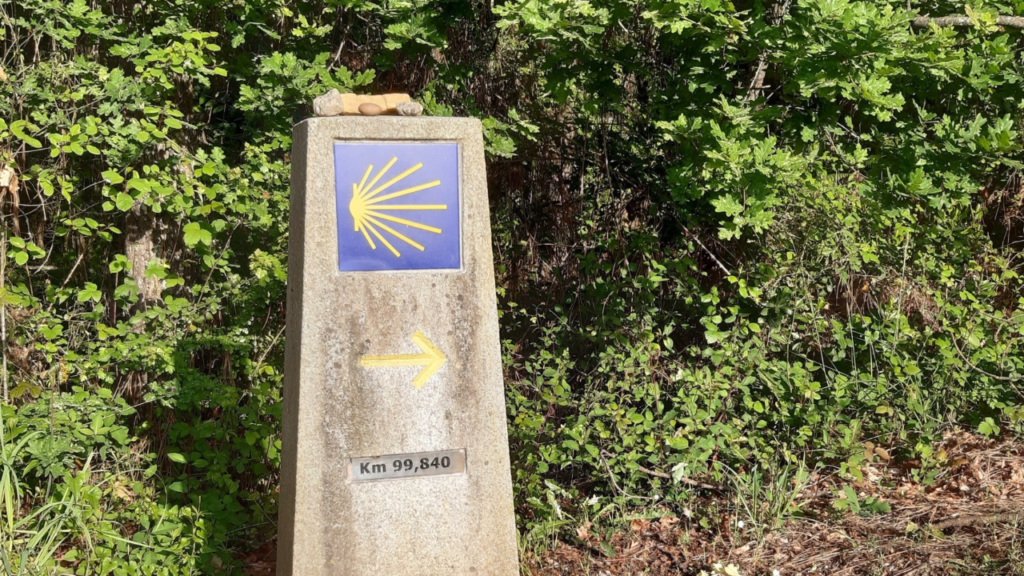

People have been walking the Camino de Santiago for centuries but, in recent years, the number of pilgrims arriving in Santiago de Compostela has risen dramatically.
In 2023 the total number of pilgrims arriving in Santiago and claiming their Compostela was 442,073. There are undoubtedly more who walked without requesting a certificate at the end.
In 2024 those figures rose to 499,242 so that’s an extra 57,000 pilgrims in just one year.
In the first six months of 2025 alone there have already been over 228,000 pilgrims claiming their Compostela.
Naturally, this rise in popularity has raised concerns about the effects of overtourism and while walking is one of the most environmentally friendly ways of getting from A to B, it’s important to consider other ways of being sustainable on the Camino.
What is sustainable travel?
At its heart sustainable travel on the Camino de Santiago means walking in a way that minimises any environmental impact, supports local communities, and respects the cultural and natural heritage of the route. Travelling with these points in mind ensures that the Camino remains accessible for future pilgrims.
What can you do to walk your Camino in a sustainable way?
There are plenty of things you can do to make your Camino as sustainable as possible. You might already have adopted a lot of these measures in your day to day life so it should be easy for you to continue them while you walk. However, when you’re on the road convenience often takes precedence over keeping up your good habits so don’t sweat it if you have a blip. Doing something is better than doing nothing.
Conversely, if you do pick up some good habits along the way make sure you take them home with you and keep up the good work once your Camino is over.
Disclaimer: This post may contain affiliate links which means if you click a link and purchase something that I have recommended I may receive a commission. While clicking these links won’t cost you any money, it will help to keep this site going. Thank you for your support, I really appreciate it.
Plan ahead
Simply walking the Camino is a form of sustainable travel but your commitment starts before you even begin your Camino as the time of year you decide to go, and the route you choose to walk, will have an impact on the environment.
Deciding when to go
It’s natural to want to walk the Camino when the weather is good which is why the most popular months are May through to September.
However, walking during these months mean that there’s a lot more pressure on local resources and it’s not just accommodation that can be in short supply.
In many parts of Spain and Portugal there may be water restrictions in place during the summer months. Where I live in Andalucia, we couldn’t use water between 11pm and 6am during the summer of 2024. Regardless of any restrictions, use water responsibly and avoid wasting it.
By avoiding these peak Camino seasons and walking in the shoulder seasons of March to April, or October to November, you’ll still have an authentic Camino experience but without the crowds.
Choosing your route
The Camino Francés is the most well known, and by default, the most popular route. In 2024 over 236,000 pilgrims collected their Compostela for walking this route with many more who finished in Santiago but didn’t claim their certificate.
If you only have time to walk the last 100 kms of this route you’ll never find yourself short of company as 151,000 of the pilgrims who walked the Camino Francés in 2024 did so between Sarria and Santiago.
I walked the last 100 kms of the Camino Francés in May 2024 and wasn’t prepared for the number of pilgrims on the way – on the first day I’m convinced I saw more pilgrims than I did over 14 days walking the Central route of the Camino Portugués from Porto in 2022.

The second most popular route is the Camino Portugués. In 2024 over 170,000 pilgrims collected their Compostela for walking this route.
If you really want to make a difference and choose a lesser travelled route there are lots of options including the Camino del Norte, Camino Inglés, Camino Primitivo and Via de la Plata.
Choosing the road less travelled means that the impact of tourism is spread more evenly throughout the region and means you can support other smaller towns and villages along the way.
Getting to and from the Camino
Rather than flying to and from your start and end points consider the alternatives and choose transport that will enable you to reduce your carbon footprint.
If you’re outside Europe and have no choice but to fly try and use an airline that has a carbon offset programme, and if you’re in Europe consider taking a bus or train – there’s an excellent, and extensive, public transport network throughout Europe.
Consider public transport too when you’re travelling to/from the airport and your accommodation.
If you want to walk the Camino but don’t know where to begin I’ve written this Camino Portugués planning guide which tells you everything you need to know and outlines all the steps you need to take to get you on your way.
Pack Sustainably
If you’re carrying your backpack, rather than using a luggage transfer service, then you’ll already want to pack as lightly as you can, but how can you also pack sustainably?
Essentially it’s a case of taking only what you need for the journey and using eco-friendly products where possible.
Here are some suggestions to help you pack wisely.
Backpack
Your backpack is an essential piece of Camino kit. I swear by Osprey backpacks as, not only are they great pieces of kit, but they also come with an All Mighty Guarantee which means that Osprey will repair any damage or defect, regardless of the reason or the age of the backpack, free of charge. This means that your backpack should, in theory, last a lifetime.
They are more expensive than some other backpacks on the market but, to me, it makes sense to spend more on something that is going to last rather than buy a cheaper backpack that won’t last and will need to be thrown away and replaced.

Read my review of the Osprey Tempest 30 backpack.
If you don’t have the budget for more expensive gear check online and consider buying second-hand equipment.
On the flip side, you can also sell your backpack once your Camino is over but, be warned, usually one Camino is never enough!
Water bottle
Take a reusable water bottle or consider a water bladder that fits in your backpack. I have a two litre bladder that fits neatly inside both my backpack and my daypack.
I also use a Chilly’s water bottle that keeps water cold for hours.
Bringing a reusable bottle reduces the need for single-use plastic bottles and, as tap water in Spain and Portugal is fine to drink, you can fill your water bladder or bottle in the morning before you set off. If you do need a top up during the day, there are many fountains along the way where you can top up with water. Look for signs saying potable water – that means it’s safe to drink.
Toiletries
To keep the weight down in your backpack consider swapping travel size toiletries in plastic bottles for solid soap and shampoo bars. You can also get solid deodorant bars. They generally come in sustainable packaging too which is another win for the environment and they last longer than their liquid counterparts.
You can also buy toothpaste tablets and bamboo toothbrushes which are made from sustainable and biodegradable materials – another way to reduce plastic waste.
Tote bag
I never leave the house without a cotton tote bag or two. On the Camino you’ll use them for grocery shopping and they’re also handy for separating items in your backpack if you’re not using packing cubes. Much better for the environment than getting a plastic bag from the supermarket (which you generally have to pay for these days). Also, if you are using them in your backpack, they don’t make any noise if you’re up and early packing your bag – rustling plastic bags is a major bugbear in dorms when other pilgrims are still trying to sleep.
Check out my own range of tote bags which come with a variety of Camino related slogans.


Clothing
Go for clothing made from sustainable materials like merino wool. While these are often more expensive they’re longer lasting so, on a cost per wear basis, they’re better for both the planet and your wallet. Merino wool also doesn’t need to be washed as often as clothing made from other fibres – another tick in the save the planet box.
Reusable utensils
If you’re planning to carry your own food to eat along the way then you might want to think about a reusable container and cutlery to cut down on your single-use plastic use and reduce the amount of waste you generate.
You can get ‘sporks’ (spoon, knife and fork combo utensils) which take up very little room and can be made of wood or metal.
Reusable straws are another item to consider if you drink a lot of soft drinks.
If you have a reusable straw make sure to clean it well. I have some metal ones that I use for homemade smoothies and which I would pop in the dishwasher after each use. Trust me, that wasn’t enough!! I won’t go into the gory details but I now make sure they have a thorough scrub by hand!
Support local communities
There are several ways that you can support the local communities as you pass through the towns and villages along the Camino.
Choose locally owned accommodation
There’s a huge choice of accommodation on the Camino but choosing smaller, locally owned accommodation over corporate hotels means that your money stays within the local economy and supports those who rely on pilgrims for their livelihoods.
Avoid renting an Airbnb as they have a huge negative effect on the local housing market. Spain’s Prime Minister Pedro Sánchez has pledged to prevent the expansion of using properties for tourism as “there are too many Airbnbs and not enough homes”.
Eat and shop locally
Choose to shop at a small local grocery store over a big supermarket, or to eat at a family run cafe rather than a chain restaurant.
By doing this you’re not only supporting the local economy but the carbon footprint of locally sourced food is greatly reduced.
It also means that you can enjoy the best seasonal, local produce – is there anything better than a plate of Padrón peppers eaten at a small restaurant in the town after which they’re named?

If you’re planning to cook on your Camino consider sharing your meals with other pilgrims to reduce food waste. It’s also worth taking a look at the Too Good To Go app which connects customers to restaurants and stores that have surplus unsold food. It operates in numerous cities and you can get some great items at reduced prices.
Shop for sustainable souvenirs
If you want a souvenir of your Camino beyond your memories avoid the tourist shops in the big cities and opt for something locally made rather than a mass-produced item. On the Camino Portugués you’ll meet enterprising locals selling a variety of products as you walk from Redondela to Pontevedra.
Many towns have weekly markets where you can buy small keepsakes or why not buy something edible before you head home? A tarta de Santiago makes a great souvenir of your trip and can be purchased last minute so you don’t have to carry it as you walk.

Practice responsible tourism
Don’t forget that people live and work along the Camino route so do all you can to be a respectful pilgrim.
Learn some basic Spanish
Making the effort to even speak just a few words of the local language is always a positive when travelling. This post ‘Learning Spanish for the Camino’ is a good starting point.
I’ve had conversations with many locals in both pidgin Portuguese (that I have no understanding of at all beyond ‘hello’, ‘goodbye’, ‘please’, and ‘thank you’) and Spanish.
Keep noise to a minimum
If you’re using walking poles make sure they have rubber tips to deaden the clicking sound, particularly if you’re passing through a town or village very early in the morning, and if you’re listening to music as you walk use headphones rather than playing it out loud for everyone to hear.
When you enter churches or monasteries bear in mind that these are places for worship so be mindful of the noise you make, especially if you’re walking with someone or as part of a group.
Respect private property
Don’t enter people’s gardens without permission and don’t help yourself to any fruit from their trees even if it is overhanging. You’ll find that the locals are generally happy to share their produce with you but either ask or wait to be offered. The same goes for when you’re walking through areas where there are grapes growing on the vines. These are likely someone’s livelihood.
It only takes one pilgrim who doesn’t observe basic courtesies to give all others who follow a bad name.
Stay on the official Camino path
The Camino passes through many different ecosystems so it’s important to stick to the official route to avoid causing any damage. Don’t pick any flowers no matter how pretty they are and don’t feed any animals that you pass along the way.
While there are some designated spots for placing rocks along the way depending on which route you walk, don’t just stack rocks willy nilly as it can disrupt natural ecosystems.
Give something back
Many pilgrims return to the Camino to volunteer in albergues as hospitaleros, or at the Pilgrim’s Office in Santiago where they welcome pilgrims and issue their Compostelas.
Find out more about volunteering through this link on the Pilgrim’s Office website.
Leave no trace
In a nutshell, carry out what you carry in and leave the Camino better than you found it. There are plenty of ways to do this.
Dispose of all your rubbish properly and use designated recycling bins. You’ll find all towns and cities in Spain have multiple recycling bins – blue is for paper, yellow is for cans and plastics, and green is for glass. If you do see litter along the way think about picking it up (if it’s safe to do so – I’m not advocating collecting someone’s used toilet paper).
Speaking of which, if you do have to go to the toilet outdoors make sure you pee responsibly. That means packing up your toilet paper and carrying it with you until you can dispose of it properly. You could also consider a ‘pee cloth’ which is a reusable alternative to toilet paper.
If you’re a smoker, take care how you dispose of your matches or cigarette butts. During the summer months forest fires are a huge problem so make sure you don’t inadvertently start a fire by being careless.
I hope this post has given you some ideas of what you can do to be an environmentally conscious pilgrim and make sure that the Camino remains viable path for future generations.
Buen Camino!

Why not pin this for later and follow me on Facebook and Instagram for more inspiration, photos and updates?

Most of my walks are fuelled by a cafe con leche (or two!) so if you would like to support my work by buying me a coffee I’d be really grateful – the more coffee I drink, the more I walk, the more content I can write!