

It can be daunting when planning a trip to Andalucia, whether it’s your first time or you’re a repeat visitor.
Deciding when to go, where to stay, and what to do can easily leave you feeling overwhelmed as, given its size (Andalucia is big, covering an area of over 87,500 km²), unless you have unlimited time (lucky you!) you won’t be able to see it all in one visit.
In this guide I’ll show you my favourite tips on how to plan a perfect trip to Andalucia without any stress.
This post may contain affiliate links which means if you click a link and purchase something that I have recommended I may receive a commission. While clicking these links won’t cost you any money, it will help to keep this site going. Thank you for your support.
An introduction to Andalucia
Andalucía is famous for its sunny climate, laid back way of life, picturesque whitewashed towns and villages (plus a blue one too!), and a heritage influenced by Moorish, Roman, and Christian traditions and some outstanding food – and that’s just for starters.
It’s also the birthplace of flamenco and Pablo Picasso, and a trip to Andalucia gives you the chance to explore iconic landmarks like the Alhambra, the Mezquita, and the Puente Nuevo in Ronda, as well as quiet villages where little has changed for centuries.

There are eight provinces within Andalucia each offering something different so, whatever your interests, you’ll find at least one reason to visit.
Almería
Almería is a port city overlooked by the Alcazaba. The coastal region of the province is known for the Parque Natural Cabo de Gata, a protected area of clear waters and volcanic landscapes. Inland, the province boasts Europe’s only desert, the Tabernas. Once used for filming spaghetti westerns you can still visit some of the film sets and enjoy a wild west show.
Cádiz
My favourite province, although I’m probably biased as it’s the one I live in.
Cádiz is a great city to spend a long weekend and the province is known for the glorious sandy beaches of the Costa de la Luz, the sherry triangle of Jerez de la Frontera, Sanlúcar de Barrameda, and El Puerto de Santa Maria, and some beautiful pueblos blancos (white towns).

Get a taster of Cádiz province with these posts:
✏️ The Best Things to do in Cádiz
✏️ The Best Things to do in Vejer de la Frontera
✏️ Running the Sherry Marathon in Jerez de la Frontera
✏️ The Best Things to do in Tarifa
✏️ Exploring the Roman Ruins of Baelo Claudia
Córdoba
If history is your thing then you won’t want to miss Córdoba – the only city with four UNESCO World Heritage sites.
In Córdoba province you’ll find historical sites such as Medina Azahara and Almodóvar del Río, the cities of Priego and Lucena, and if you’re lucky you might spot an Iberian lynx in the Parque Natural de Sierra de Cardeña y Montoro.

Get a taster of Córdoba province with these posts:
✏️ The Best Things to do in Córdoba
✏️ Everything You Need to Know About Visiting the Mezquita in Córdoba
✏️ A Relaxing Visit to the Hammam Ál Andalus in Córdoba
Granada
Granada is probably best known for the Alhambra but is also home to the Albaicin, the city’s oldest neighbourhood which was awarded UNESCO World Heritage Status in 1984. Granada is also a great place for bar hopping as you’ll be offered a free tapa with every drink you buy.
Granada province is home to the Sierra Nevada mountain range where you can ski and snowboard during the winter and enjoy some excellent hikes the rest of the year. The province also has some lovely beaches on the Costa Tropical, and the tallest mountain on the Iberian peninsula, Mulhacén.

Huelva
On the border with Portugal Huelva is one of the lesser visited provinces but one with an interesting history. The city of Huelva itself has an imposing cathedral and plenty of history about Christopher Columbus as some of Columbus’ ships were built in the city.
The province is home to the Parque Nacional de Doñana, a wetland area home to many species of birds including flamingos, and the Rio Tinto mines, as well as plenty of beaches.
Jaén
Another less touristy province Jaén is known as the olive oil capital of the world.
In Jaén itself you can visit the Castillo de Santa Catalina, and the impressive Cathedral while the province is home to the towns of Úbeda and Baeza, both granted UNESCO World Heritage status in 2003. Plus, of course, olive trees as far as the eye can see!
Malaga
Malaga is the gateway to the Costa del Sol and often overlooked as a city to spend a few days. However, if you do decide to stay in Malaga you’ll find a mix of history, culture, and, if you visit at Christmas, some of the best light displays in the country.
Malaga province is home to more white towns, the beach resorts of the Costa del Sol, and some excellent hiking including the Gran Senda de Malaga and the Senda Litoral de Malaga.

Get a taster of Malaga province with these posts:
✏️ The Best Things to do in Ronda
✏️ Everything You Need to Know About Walking the Caminito del Rey
✏️ Cycling from Ronda to Setenil de las Bodegas
Seville
The capital of Andalucia, Seville is the birthplace of flamenco and home to the Real Alcázar, Plaza de España and, if modern architecture is your thing, the Metropol Parasol or Setas de Seville.
In the wider province you’ll find historical towns such as Carmona and Osuna and, if you’re a keen walker, the Via de la Plata starts in Seville and heads through the province on its way to Santiago de Compostela.

I’ve lived in Andalucia since 2017 and haven’t been everywhere (yet!) so don’t expect to see everything in a week or two!
Now you have a little background on Andalucia and its provinces it’s time to start planning and, if you follow my step-by-step guide, you’ll have your perfect trip to Andalucia all mapped out in no time.
Step One: Deciding when to visit Andalucia
The timing of your visit can make or break your trip, and it doesn’t just depend on the weather. The Andalucians love a party and there are big festivals throughout the year. Some are specific to one town or region such as the Feria de April in Seville, the Feria del Caballo in Jerez de la Frontera, and the Fiesta de los Patios in Córdoba while others are region-wide, such as Semana Santa.

If your proposed visit coincides with a major festival then you’ll need to book everything as early as you can. Hotels fill up really quickly for the big festivals and the longer you wait, the more expensive they get so don’t wait.
🌸 Spring (March to May) is when the region is coming back to life after winter. The weather is mild and the annual festivals start. Semana Santa is the first big one celebrated throughout Andalucia, followed by the Feria de Abril in Seville and Fiesta de los Patios in Córdoba.
You can read more about why you should visit Andalucia in spring in this post.
⛱️ Summer (June to August) is hot. Really hot!! If you just want a lazy beach holiday then, by all means, book a trip to the Costa del Sol. Expect it to be busy though as Spanish school holidays mean that the cities empty while the locals head to the coast. For quieter beaches with a cooling breeze head to the Costa de la Luz instead.
If you want to explore other parts of Andalucia, particularly inland, then be prepared – it’s like opening the door of a furnace. We live slightly inland and the stifling heat is the main reason we tell family and friends not to visit us during the summer months.
🍂 Autumn (September to November) is, like spring, my other favourite time of year in Andalucia. The weather is still warm and, while late autumn may not be hot enough to lounge on the beach, it’s ideal for exploring the cities or hiking in the mountains.
❄️ Winter (December to February) is actually a great time to visit although you should be prepared for rain. In December, the cities are decorated for the festive season (Malaga’s Christmas lights are legendary) and, of course, Spain celebrates Christmas in January so, you’ll get to enjoy the Three Kings parades throughout the region.
It’s also the time to visit if you’re into winter sports as the Sierra Nevada ski slopes will be open for business.
Step Two: Deciding how long to spend in Andalucia
How long you have to spend in Andalucia will determine just how much you can reasonably see and do.
A long weekend in Andalucia
If your time is limited (a long weekend perhaps) then stick to just one destination rather than trying to cram too much into a few days.
Malaga makes a great base for a long weekend. You can be in the city from the airport in less than 30 minutes which leaves you plenty of time for soaking up the culture (and the sun).
Malaga has lots of historical places of interest such as the Alcazaba and Roman amphitheatre, a stunning cathedral, and plenty of museums, not to mention some lovely golden beaches. There are also loads of bars and restaurants for sampling some seafood delicacies.

One week in Andalucia
If you have a week you could visit two or three cities and get to at least see the main attractions in each.
Seville, Granada, and Córdoba is the classic triangle for people who are short on time but want to see the highlights of Andalucia. Visiting these three cities will give you the ideal blend of history and culture, not to mention some superb local cuisine. It’s quick and easy to travel between all three by train so you won’t waste any precious time.


Two weeks in Andalucia
With two weeks you can spread your wings and add another city or two into the mix, as well as some of the white towns. Or, you can stick with just three and really slow down and savour them with perhaps a day trip or two thrown in.
For example, adding a few days in Cádiz to your itinerary will give you the chance to spend some time near the sea and you could easily add day trips to Jerez de la Frontera and some of the nearby white towns such as Vejer de la Frontera or Conil de la Frontera.

Three weeks or more in Andalucia
If you’re lucky enough to have three weeks or more then you’re in for a real treat and can really explore the region and take some of the roads less travelled.
Don’t attempt to see the whole region if you have a fortnight or less. You’ll be dashing from place to place, seeing only one (or two if you’re lucky) attractions in each place, and running on empty by the time you head home.
Step Three: Figuring out where to go in Andalucia
Once you know how long you have to spend in Andalucia, it’s time to narrow down where you want to go and what you want to see and do.
With such a big region you’re spoilt for choice and as I said above, unless you have unlimited time you’re not going to see it all.
Obviously where to go will also be influenced by your interests. If you’re a beach lover then there’s no point planning to visit Seville, Granada, or Córdoba which are all inland. Likewise, if you’re a history buff then staying in a resort town on the Costa del Sol isn’t going to float your boat.
I’ve given some ideas in Step Two but this is a good time now to get a guide book and start researching. The big names in travel guides such as Lonely Planet and Rough Guides are full of practical information including itinerary suggestions.
Blogs are another good source of information but make sure that they’re up to date and that the writer has actually visited the place that they’re writing about. You’d be surprised how many travel bloggers write about places they’ve never been, using AI and stock photos. Not this one of course!
Step Four: Designing your itinerary
Once you’ve decided which towns and cities you intend to visit you can start to figure out which order you’ll visit them, and how you’ll get to each of them.
Public transport in Andalucia is pretty good, certainly within the bigger towns and cities but if you want to get off the beaten track you’ll need to hire a car.
Andalucia by train
There’s a good rail network and if you’re mainly planning to visit the bigger towns and cities, train travel is probably the best way to go. I love travelling by train in Andalucia – they’re fast, comfortable, and you get to enjoy some gorgeous scenery along the way. I live on the Algeciras to Bobadilla line and often take the train to Ronda – it’s stress free compared to driving the winding roads and there’s no need to stress about parking once I get there.
Andalucia by bus
If you want to visit some of the smaller towns then taking a bus is your best bet. Buses in Andalucia are generally reliable and they’re pretty good value too despite taking longer than the train. You can check bus routes and timetables on Omio.com.
Andalucia by car
The main roads are generally in good condition and you can easily get between cities using the motorways quickly (even more so if you use the toll roads).
Hiring a car will give you much more flexibility with your itinerary but driving in Andalucia isn’t without its challenges particularly if you’ll be visiting any of the white towns or other small villages where the streets are narrow and finding parking spaces can be difficult.
In short, if you’re mainly visiting the cities go by train. If you want to visit some smaller towns and villages go by bus (or book day tours). If you really want to get off the beaten track hire a car.
Step Five: Fine tuning your itinerary
By now you know which cities and towns you’ll be visiting and how you’ll get there. The fun part now is deciding what you’re going to do in each place you visit.
How you do this part will depend on your personal travel style.
I always have a rough plan in place for what I want to see and do but I don’t like to have everything set in stone. Rigid plans with time slots allocated to every activity isn’t my idea of a holiday. I know some people like to have Excel spreadsheets with every minute accounted for but that doesn’t always work in Andalucia – this is the home of the siesta after all!
Just as an example, when I went to Granada for the first time I spent almost the entire day in the Alhambra and Generalife gardens. If I’d had more attractions planned I’d have had to rush my visit potentially missing out on some of the sights.

Having said that, if your time is limited then it’s worth making a note of opening times bearing in mind that, in Andalucia, you’ll have certain local customs to consider (yes, it’s the siesta again where many places close during the afternoon).
I always use Google maps to mark everything I want to see. That way I can see where everything is in relation to each other so I can figure out the quickest and easiest way to get between A and B.
The joy of Andalucia is that you never know what you might find around the next corner. If you have a regimented plan you could miss out on an impromptu flamenco performance in Plaza de España in Seville, or the smell of fried fish urging you into a small chiringuito.
Whatever, and however, you plan, do make sure that you factor in some downtime – sometimes the best memories can be made people watching in a shady plaza while enjoying tapas and a tinto de verano.

Of course, another reason not to cram your agenda too much is that it gives you the perfect excuse to return one day!
Step Six: Setting your budget
Once you’ve decided which places you want to visit and what you’d like to do there it’s time to look at your budget to be sure that you can afford to do it all.
When you’re setting your budget you’ll need to factor in accommodation, transportation, meals and entrance fees to attractions. Don’t forget too, the cost of getting too and from Andalucia.
How much you’ll spend in Andalucia is entirely up to you. You can stay in hostels or small guesthouses, eat inexpensive tapas or enjoy a menú del día, and mainly do free activities wherever you visit.
Alternatively, you can splash out by staying in a luxury parador, eating in Michelin starred restaurants and taking private tours of your chosen attractions.
Step Seven. Making travel arrangements
Once you’ve finalised your itinerary and worked out your budget you can start making your plans a reality – yes, it’s time to get out your credit card and start booking things.
Flights to Andalucia
First things first, you need to get to Andalucia.
The most popular airport is Malaga but you can also fly into Almería, Granada, Jerez de la Frontera, and Seville. Córdoba also has an airport but it doesn’t currently have international flights.
Another option is to fly into Gibraltar and cross the border into Spain.

Transport within Andalucia
If you’re not planning to hire a car you’ll need to book your public transport.
Book your train tickets as soon as you know your dates especially if you’re planning to travel between the bigger cities. Apart from being cheaper when you book in advance they can sell out.
Car hire
If you plan to hire a car then, in Andalucia, bigger isn’t always better. If you’re going to be driving in small towns and villages be prepared for narrow streets that aren’t always the easiest to manoeuvre.
Step Eight: Booking your accommodation
Accommodation is likely to be your biggest expense and there’s a huge choice from beachside campsites, flashy holiday resorts, luxury paradors, and hotels to suit all budgets.
Some of the most interesting places I’ve stayed in Andalucia include a castle built into the old town walls in Castellar de la Frontera, a converted flour mill in El Chorro, and a 17th century Franciscan monastery in Vejer de la Frontera.

If you can please avoid booking an Airbnb particularly in cities. In 2025 over 65,000 properties were removed from Airbnb’s listings in Spain and new regulations were introduced that require all short-term rentals to display a national registration number. This move by the government was to address housing shortages and rising rents with the aim of increasing the amount of available affordable housing for local residents.
I always use Booking.com when choosing accommodation. One of the advantages (apart from their excellent cancellation policy) is that you can use their maps to see how far each hotel is from the city centre. If you have limited time there’s no point booking a hotel too far from the city centre if you’re going to have to waste time on buses to get to the main attractions. Similarly, it might be cheaper to stay on the outskirts of a city but you’ll have to spend money on buses or taxis which defeats the object.
Although breakfast is often included when booking a hotel I don’t personally think it’s worth it in Andalucia. You can get a great traditional breakfast of pan con tomate at every bar and café for only a few euros.

Step Nine: Booking tours and/or entry tickets to attractions
The really popular attractions in Andalucia sell out fast so don’t leave it too late to book your tickets.
The main attractions that you definitely need to book ahead of time are:
The Mezquita in Córdoba
While you can visit the Mezquita between 8.30am and 9.20am for free (yes really!) it’s not enough time to do it justice so you’ll want to book a ticket that gives you plenty of time to wander through the building and really appreciate its sheer size.

That free entry I mentioned? You can read all about it and more, including how to buy tickets, in this post about visiting the Mezquita.
The Alhambra in Granada
The Alhambra is one of the most visited attractions in Andalucia and can book up months in advance particularly in the peak season so, as soon as you know you’re including Granada in your Andalucian adventure, book those tickets! You can find all the details on the official website.
If you can’t get tickets on the official website it’s worth checking Get Your Guide or Viator to see if there are any tours available but they’re not always guaranteed so don’t delay!
The Caminito del Rey in Malaga
The Caminito del Rey is an adrenaline junkie’s dream but there are only limited spaces available each day so book ahead as this is one activity you don’t want to miss out on.
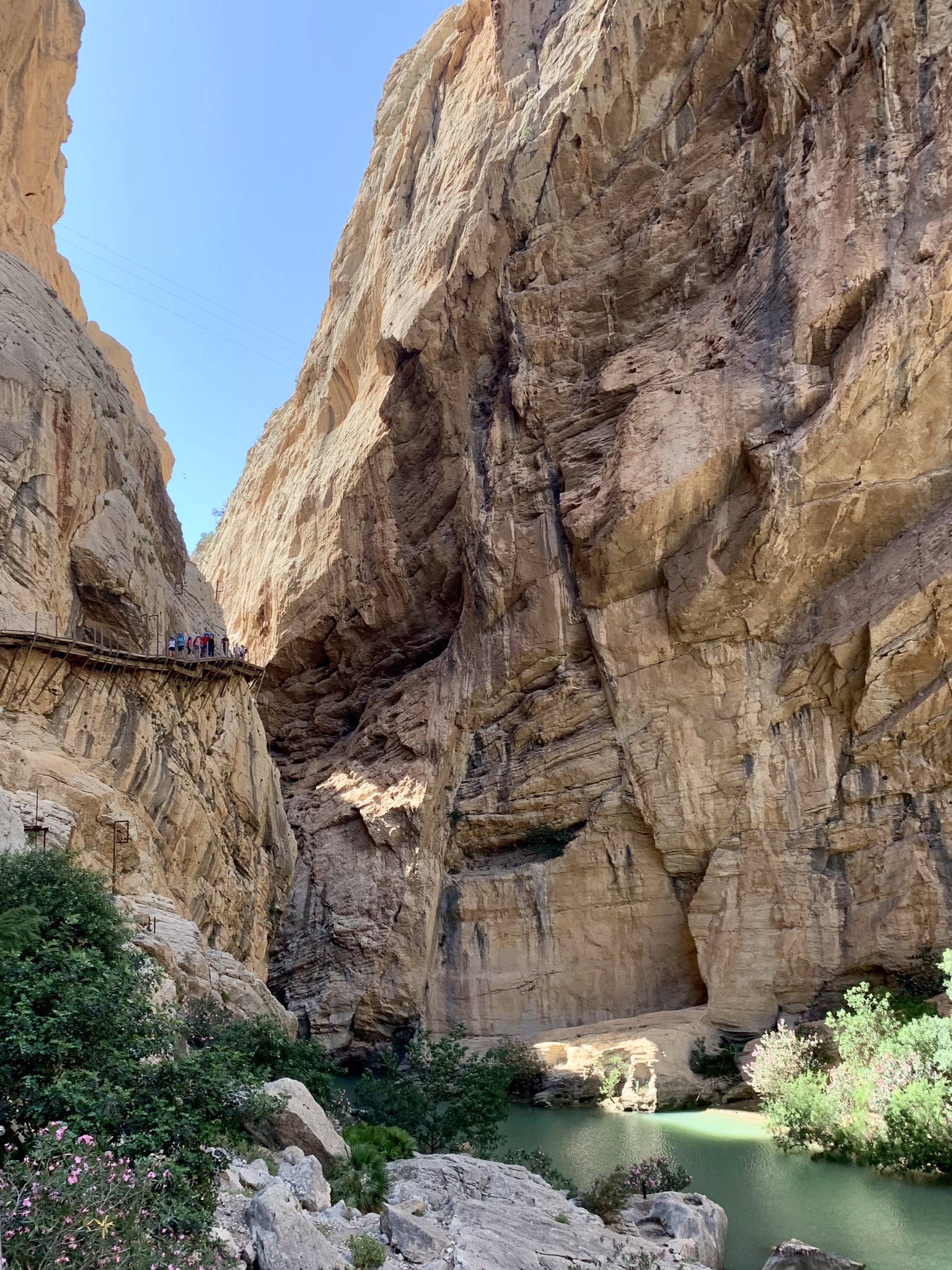
You can read everything you need to know about walking the Caminito del Rey, including how to buy tickets, in this post.
The Real Alcázar in Seville
Like the Alhambra, the Alcázar sells out quickly particularly if you’re visiting during peak season so book on the official website as soon as you know the dates you’ll be in Seville.
As with the Alhambra, you may be able to find guided tours available at short notice on Get Your Guide or Viator.
Step Ten: Making the final pre-trip preparations
Once you’re all booked you can start your pre-trip prep. From learning a few Spanish phrases, planning your holiday wardrobe, to understanding some Andalucian cultural quirks, some prior preparation will help your trip go smoothly.
Learn a few words of Spanish
Nobody will expect you to be fluent but it’s always a good idea to have a few phrases under your belt ahead of your trip. I bought a copy of the Lonely Planet Spanish phrasebook when I first moved to Andalucia and it was so helpful while I was still getting to grips with learning a new language.
You might be able to get away with speaking only English in the bigger towns and cities, but you shouldn’t bank on it and certainly not when you’re in small towns and villages off the popular tourist trails.
If you make an effort, no matter how basic, you’ll find that you’ll generally meet with positive reactions but, please, don’t be one of those people who resorts to simply speaking louder and slower in a bid to be understood!
Some of the basics you can start with include:
⭐ Yes – Sí
⭐ No – No
⭐ Please – Por favor
⭐ Thank you – Gracias
⭐ I don’t understand! – ¡No entiendo!
⭐ Do you speak English? – ¿Hablas inglés?
⭐ I only speak a little Spanish – Solo hablo un poco de español
If you do want to do some in depth language learning have a read of this post about learning Spanish. It was written for those planning to walk the Camino de Santiago but has lots of methods that can be easily adapted to any Spanish visit, and includes plenty of useful phrases including greetings, food and drink, and directions.
A word of warning. Even if you think you can speak Spanish well that can all be turned on its head when you get to Andalucia as Andalucians have their own regional accent, speak rapidly, and frequently shorten words by dropping the endings or sometimes the middle letters which can take some getting used to!
Perfect your packing
Yes, Andalucia does have over 300 days of sunshine a year but not all sunny days are created equal.
For summer visits make sure you pack light breathable clothes as it can be unbearably hot so the lighter the fabric the better. You’ll also want to bring a hat and sunglasses and, if you’re going to be visiting any religious buildings, bring something lightweight to cover your shoulders. Bonus if it stops you burning too!
Winters are generally mild but as soon as the sun goes down it gets really cold. Some days there’s even a noticeable drop in temperature just crossing from the sunny side of the street into the shade. So, if you’re visiting in winter do bring a warm jacket for the evening and pack layers for the daytime.
If you’re going to be visiting any small towns and villages be aware that they have a lot of cobbled streets. In fact, even in the big cities there are often a lot of cobblestones when you get into the old town area so pack comfortable shoes.

Unless you’re visiting from within Europe don’t forget to pack a travel adaptor too as Spain has different plug sockets than many countries including the UK, USA, Australia, New Zealand, Canada and South Africa.
Sunscreen is something you need year-round in Andalucia but this is easily picked up in the bigger supermarkets like Mercadona, or in pharmacies, if you don’t want to bring it with you.
Understand Andalucian culture
The Andalucian way of life is slower than you might be used to. The concept of mañana (doing something later rather than immediately) is real as is siesta time. A lot of shops and businesses close for the afternoon, and not just in smaller towns and villages. Use that time between 2pm and 5pm to take a break yourself like enjoying a long leisurely lunch.

Meal times can also take some getting used to. Just because you eat your evening meal at 6pm when you’re at home doesn’t mean you’ll be doing the same in Andalucia. If you do find a restaurant open at that time you can almost guarantee that it caters just for tourists. Most restaurants don’t open until 8pm at the earliest and you’ll find that many local families (including babies and small children) don’t even come out until 10pm or later.
When you are dining out, you won’t feel pressured to leave once you’ve finished your meal. One of the joys of eating out in Andalucia is the sobremesa – the time you spend sitting at the table after you’ve finished eating. You’ll see large groups sitting chatting and relaxing long after their plates have been cleared.
Tipping isn’t expected either and it’s totally acceptable to round the bill up or just leave a few coins.
Safety First
If you’re a solo traveller you might be worried about the safety aspect of visiting Andalucia. While Spain is generally a safe country to travel in, you should take all the usual precautions that you’d take at home. If you do need the emergency services for any reason the number is 112.
Make sure you get travel insurance before your trip too – it’s always better to be safe than sorry.
Thanks for reading – I know this is a long post but I hope it’s given you all the information you need to plan a successful trip to Andalucia. If you have any questions just pop a comment below.
Happy travels!

These are some of my favourite resources that you might find useful when planning your trip to Andalucia.
✈️ Get a good deal on flights. I use Flight Centre to check for good deals on flights worldwide.
🛏️ Find the best accommodation. I regularly use Booking.com as they have a huge range of accommodation options in Andalucia as well as an excellent cancellation policy in case you have to change your plans. Another bonus is that the more you book the more loyalty rewards you get – always a win!
🚗 Book a rental car. Andalucia is the ideal destination for a road trip, so hiring a car offers you freedom and flexibility. I always use Discover Cars which lets you compare multiple car hire sites.
🚅 Book your train travel. Travelling by train is a fantastic way to see the Andalucian countryside and can often work out cheaper than hiring a car. The national railway is RENFE.
🚌 Book bus travel. Omio is a handy website if you’re planning to travel by bus but it’s also good for comparing prices for trains, planes and ferries too.
🏝️ Organise trips and tours. It’s worth booking ahead if you intend to visit any of Andalucia’s most popular attractions. I always use Get Your Guide when I’m planning tours or day trips as they have a wide selection to choose from throughout Andalucia.
💰 Take out travel insurance. Travel insurance is vital and it’s really not worth the risk of taking a trip without it. I buy my insurance through Globelink who have policies to suit whatever type of traveller you are.
📚 Get your travel guides. While blogs (like this one!) can help you plan your trip it’s still useful to have a good travel guide to make sure you don’t miss any of the sights. Lonely Planet and Rough Guides are the two best known.
☎️ Keep in touch with an eSim. I use easySim when I travel so I don’t rack up huge data roaming bills. Use my referral code RF36764TL to save £2 on your first order.
If you would like to support my work by buying me a coffee I’d be really grateful – the more coffee, the more I can travel, the more content I can write! Thanks for your support, it’s very much appreciated.
Why not pin this for later and follow me on Facebook, Instagram and Twitter for more inspiration, photos and updates?


This is such a well-structured and practical guide. I like how you explained each points, from choosing the right time to visit to organizing the itinerary. i will definitely keep all this in mind before planning my trip maybe my next trip will be to Spain.